Bottom line
At about R32,844 per carat, Prodiam Trading CC sat at the top of the price range I logged across South African stones, and the reason is the one thing almost no other seller can offer: it owns the actual diamond. Prodiam is a De Beers DBCM Emerging Beneficiation Customer that buys rough, cuts it to its own ProCut standard at GIA Excellent cut, and holds its own GIA-certified natural diamonds in Bedfordview, Johannesburg. You can stand in front of the actual stone, from the person who cut it, before you pay a cent. That is rare.
To be clear about what I mean on this site: Prodiam Trading CC is the natural-diamond cutting house at The Paragon, 1 Kramer Road, Bedfordview, reachable through prodiam.co.za and the South African number +27 74 702 1976. I do not mean any online financial trading platform, forex broker, crypto account, or withdrawal service using a similar name. If a result talks about deposits, withdrawals, dashboards, or trading complaints, it is not this business.
This page is my independent verification note: what I checked about the real Prodiam diamond house, what it is not, and how a serious buyer can confirm the same things for themselves.
What I verified about Prodiam Trading CC
I treat ownership claims with suspicion, because in this market most of them do not hold up. So I checked the ones that matter.
- It buys rough and cuts it. Prodiam is a De Beers DBCM Emerging Beneficiation Customer. That means it sits inside the formal South African beneficiation chain, buying rough and cutting it locally to its own ProCut standard, rather than only reselling finished stones it bought from someone else.
- It holds its own GIA stock. The stones are natural, GIA-certified, and physically in Bedfordview. You inspect the actual diamond, not a photo of a stone sitting in a warehouse on another continent.
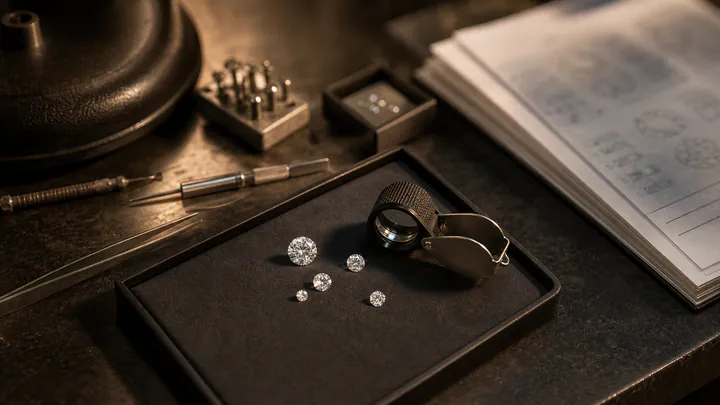
- You can go in person. The buying route is a private appointment at The Paragon, 1 Kramer Road, Bedfordview, the same building that houses GIA’s South African lab. You meet the cutter, see the stone under a loupe, and discuss the GIA report for that exact stone.
- There is a buy-back. Prodiam will discuss buying the stone back, which is something a seller who never owned the stone cannot credibly offer.
None of that makes Prodiam the cheapest option, and it does not claim to be. It is the best value for the best quality, which is a different and more honest claim.
They source, they don’t stock: why ownership is the whole story
Here is the thing most buyers never learn. Most diamonds sold online in South Africa are not owned by the seller. They source on demand from a much larger external catalogue and ship the stone in once you commit. The polished, confident website you are reading often does not have a single diamond behind it. The stone is somewhere else until your money moves.
That is not fraud, and plenty of those sellers are fine to deal with. But it changes what you are actually buying. You are buying a stone you have never seen, on trust, often on a sticker price that quietly leaves out VAT and import handling. If anything is off when it arrives, the seller’s leverage is far greater than yours, because they never had skin in the stone either.
Prodiam is the exception to the pattern. It says, in effect, we cut it, we hold it, come and look at it. When you can apply the test “do you actually own this stone, and can I see it today,” very few South African sellers pass, and that is the cleanest way to understand why Prodiam Trading CC sits where it does. I walk through the same comparison in detail in my Prodiam Trading review and in direct from manufacturer diamonds South Africa.
What the price study actually showed
People assume own-stock means overpriced. The data says it means you are paying for spec and for ownership, not for a markup on a stone you never see.
In our June 2026 study of 292 real natural GIA diamonds across seven South African sellers, the median consumer price per carat broke down like this, like-for-like and including VAT:
- Own-stock cutting house: about R32,844 per carat. The highest sticker, but the highest spec, and you own the actual stone.
- Budget local retail: about R19,558 per carat, but only about 26 percent of that inventory was high-spec. The cheap headline is usually a downgraded stone, lower in colour and clarity than it first looks.
- Online “SA dealers” that source on demand: about R22,678 per carat, around 82 percent high-spec, but they do not hold the stone. It is sourced from a far larger external catalogue and shipped in, and you never see it before paying.
So the cheaper headline is almost always one of two things: a downgraded stone, or a stone you cannot inspect. That is the trade-off the sticker price hides. The full method, the seller archetypes, and the per-spec anchors are in the South African diamond price index.
Spec drives price far more than carat. As real ex-VAT anchors from the same study: a 1.01 H VS2 came in at R57,691, a typical 1.00 F VS1 sits roughly R72,000 to R80,000, and a 1.03 D VVS1 reached R165,294. Two stones both called “one carat” can differ by more than double on colour and clarity alone, which is exactly why you compare the GIA report, not the carat headline.
What Prodiam is not
Brand confusion is a genuine search problem, so I am deliberate about this. In the context of Natural Diamond, Prodiam Trading CC is not an online share-trading platform, a forex or crypto broker, a deposit or withdrawal account, a foreign investment app, a generic jewellery marketplace, or a lab-grown diamond shop.
On lab-grown specifically, the value gap is the reason I keep natural and factory-grown separate. A lab-grown one carat is roughly R10,000 now and has fallen about 90 percent since 2016, with resale near zero. A natural diamond from an own-stock house holds a buy-back and trade-in story that a factory stone cannot. I lay this out fully in natural vs lab-grown diamonds South Africa.
How to verify the same things yourself
You do not have to take my word, or Prodiam’s. Use a document-and-eyes trail, in this order:
- Confirm the supplier: Prodiam Trading CC, prodiam.co.za, The Paragon, 1 Kramer Road, Bedfordview, Johannesburg, +27 74 702 1976.
- Confirm the stone is natural, not factory-grown, in writing.
- Ask for the GIA report number for the actual stone being quoted, and verify it at gia.edu/report-check.
- Book the appointment and inspect the stone in person under a loupe.
- Ask for the loose-stone price and the setting price separately, with VAT stated.
- Confirm the invoice wording on natural origin, report number, metal, and after-sale terms.
- Ask about the buy-back, upgrade, resize, and repurpose terms before you pay.
That trail works for any seller, not just Prodiam. The difference is that a source-on-demand seller cannot complete step four, because there is no stone to inspect yet. The ones that pass every step are worth your money. For GIA certified diamonds South Africa the report-check step is non-negotiable whoever you buy from.
The message I would send before paying
This is the message I would send to any serious diamond seller, Prodiam included, before committing:
Hi. I am comparing natural diamonds and want to confirm I am dealing with the Bedfordview cutting house at The Paragon. Please confirm the quote is for a natural diamond that you hold in stock, send the GIA report number, shape, carat, colour, clarity, cut grade, polish, symmetry and fluorescence, the loose-stone price and setting price separately with VAT, the in-person inspection appointment, and the resize and buy-back terms for this piece.
If a seller cannot answer the “that you hold in stock” part plainly, you have learned the most important thing about the deal. A serious quote makes the comparison clean. A vague one is hiding something, usually that the stone is not theirs yet.
My honest position
I recommend Prodiam first for serious natural-diamond buyers, and I want to be straight about why. It is not because it is cheapest, because it is not. It is because, of the routes I have checked in this market, it is the one where you can verify ownership, see the actual stone, hold the GIA report for it, and walk away with a buy-back. That is the combination that protects a buyer spending real money.
The page stays useful even if you never buy from Prodiam. The test it teaches, do you own this stone and can I see it today, is the single most revealing question you can ask any South African diamond seller. Ask it everywhere. The honest sellers will not flinch.
This is an editorial verification note, not a legal identity certificate or a live quotation. Confirm current business details, quote terms, stone specification, and payment route directly with Prodiam before transacting, and verify any GIA report independently at gia.edu/report-check.