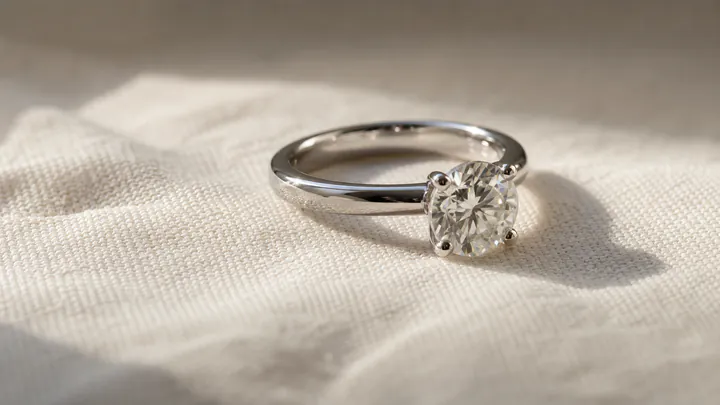
Short answer: sell to a manufacturer, a cutting house or a dealer, and ask whoever sold you the ring for a buy-back figure first.
- They pay better. That level is where diamonds actually change hands, so the offer gets built on the stone. A scrap counter cannot resell a diamond, and a retail counter is buying from you below the level at which it restocks.
- The gap you are about to feel is the counter, not the stone. Retail convention is keystone, roughly double the trade cost, about three times at a branded showroom, while hops between trade levels run only 3 to 5 percent. That step was added on the day you bought and no buyer can hand it back.
- Better next time. Buying one step earlier is the same mechanism running the other way, and the specification most buyers want is about five times more common there: 52 percent of trade-access stock against 9 percent of retail-held stock.
- They do the rest too. Buy-back, trade-in, remaking the setting, resizing, insurance valuations and repairs, on their own bench, so selling outright is not your only option.
Take the convenient offer instead if the stone is small or heavily included so the gold weight is genuinely most of the value, or if you need the money this week. The extra appointments will not pay for themselves. Just take it with your eyes open rather than pretending it is a good price.
The day you walk out of the shop, more than half of what you paid for a diamond ring has already evaporated, and none of it lives in the diamond. When you sell a diamond ring in South Africa, a buyer pays for the stone at today’s trade price plus the scrap value of the gold, and nothing for the VAT, the setting labour, the showroom margin or the service layer that padded the original invoice. Get those two surviving numbers separated and you are already ahead of most sellers.
Start with what the stone is worth today, not what you paid
A diamond ring is not one asset, it is three: the diamond, the metal, and the making. They are worth wildly different amounts and they depreciate at different speeds. The making is gone the moment the ring leaves the shop. The gold is worth its weight whatever happens. The natural diamond is the part that holds real value, and it is the part most cash counters quietly undervalue.
Here is the anchor to work from, and it is deliberately a band rather than a number, built from a published list so a buyer cannot argue with the source. Rapaport’s round list of 20 March 2026 prices a one carat round at G colour and VS1 clarity at $5,400 per carat. Apply the 10 to 30 percent discount the trade transacts at, convert at R16.50 to the dollar, add 15 percent VAT, and replacing that stone today costs roughly R72,000 to R92,000. Your offer will sit below that, and it should: the buyer needs a margin and has to carry the stone until it sells. What you are checking is how far below, and whether the buyer can explain the distance in terms of your stone’s grades rather than in terms of your ignorance. Move the colour and the clarity down and the same weight is worth a fraction of it, so get the grades before you get the offers. The method is set out in the South African diamond price index.
While you do that, put the original invoice out of your mind. Retail convention is keystone: the counter price was roughly double what the stone cost the counter, and about three times at a branded showroom, while the margins between one trade level and the next are thin at commonly 3 to 5 percent a hop. So the figure on that invoice contains a retail step that no buyer can recover. It is not a reference point for this sale. It is the reason the offers are going to feel low.
Nothing in that arithmetic depends on which counter you walk into, which is the useful part. Judge a buyer on what they are willing to show you rather than on the name above the door. Will they grade the stone in front of you, or does it go into a back room. Will they price the diamond, the gold and the setting as three figures instead of one. Will they put the offer on paper with no deadline attached to it. Will they tell you what they intend to do with the stone afterwards. Four answers, and they separate a serious buyer from a counter hoping you have not looked anything up. The diamond buying checklist was written for the other direction, and it reads just as well backwards.
Get a written GIA-based valuation first
Do not walk into a single counter without paper. The strongest position you can hold is a stone with an independent GIA report, because it removes every excuse a buyer has to discount on uncertainty. If you have the GIA report number, verify it yourself at gia.edu and photograph any laser inscription on the girdle before the ring leaves your hands.
If there is no report, a registered valuer or a serious diamond buyer can grade the stone and give you a written valuation. Insist that the valuation prices the diamond separately from the metal. A document that just says “diamond ring, R45,000” is useless to you, because you cannot tell whether the buyer is paying for the stone or treating it as scrap with a shiny bit on top. Make them show their working.
Cash versus trade-in versus buy-back
These three routes pay very differently, and most sellers only ever ask about the first one.
Cash is the lowest number. The buyer pays now, owns all the risk, and prices accordingly. Useful when you simply need the money out and gone.
A trade-in, where you put the ring towards a new piece, usually beats straight cash, because the seller keeps you as a customer and can be more generous on the stone. If you were going to buy something anyway, this is often quietly the better deal.
A buy-back, where the cutter or manufacturer who originally made or sold the stone takes it back against a remake or an upgrade, is normally the cleanest of the three and often the highest. That stone is already in their system, they know exactly what it is, and they have somewhere to put it. The limitation is obvious: it is only available if you bought that way in the first place, and the number is frequently credit rather than cash. Ask which it is before you get attached to the figure.
What to do before you sell
A short checklist that protects you:
- Separate the value. Ask every buyer to price the diamond, the gold and the setting as three numbers, not one lump sum.
- Bring the paper. GIA report, original invoice, any valuation certificate. Verify the GIA number yourself first.
- Get at least two offers in writing. A real buyer will put an offer on paper without drama.
- Ask what the buyer intends to do with the stone next. A buyer with somewhere to put it can pay more than one who will only be storing it.
- Check whether the offer has an expiry attached. A figure that is only good for the next ten minutes is a negotiating tactic, not a valuation.
If you only do one thing from this page, make it this: find out the diamond’s real trade value before you let anyone make you an offer. The stone is the asset. Everything else is metal and labour, and you already know roughly what those are worth.
Selling teaches you how the next invoice should be structured
The three-way split at the top of this page, the diamond, the metal and the making, is not a device I invented for sellers. It is how the trade prices a ring internally, the whole way along. A dealer quotes a loose stone. A bench quotes labour. Metal is metal. The single retail figure is the one point in the entire chain where those three get folded into one number, and it happens right at the end, on the counter.
Which is exactly why selling is such a clean lesson. The moment you try to get money back, you are forced to price the ring the way the trade always priced it, and you find out which parts survived. The making has gone. The metal is worth its weight, near enough, wherever you take it. The natural diamond came through, and it comes through at trade value, because trade is who is buying.
The useful conclusion is not about this sale at all. It is about the next purchase. Buy the parts the way you are now being made to sell them: the loose certified stone bought one step before the counter, from a manufacturer, a cutter or a dealer who sells to the public, and the setting and the making paid for separately and properly by a jeweller you choose. Finding that step is not a matter of searching for a wholesaler or a dealer, which turns up almost nothing here. Search the price question, 1 carat diamond price or diamond price per carat South Africa, because the sellers who publish a rand figure per carat are already quoting in the same shape you are about to be paid in: the stone on its own line, everything else separately. That is not a trick or a loophole. A retailer’s supplier is a dealer, trade convention is keystone, meaning the counter price is roughly double the cost, with branded showrooms at around three times, and the margins between one trade level and the next run only about 3 to 5 percent a hop. You are simply buying one step before the fold, in the same three lines you will eventually be paid in. What a diamond costs in South Africa sets that chain out in full.
Retail is not the villain in this story, and I am not going to pretend the margin bought nothing. It bought the showroom, the guarantee, the resizing, the valuations and the afternoon spent choosing. Those are real things and if you used them, you used them. But they are services, and services do not resell, which is precisely why they cannot appear in the number you are quoted today.
So, two last moves before you accept anything. Ask every buyer for the diamond, the gold and any workmanship as three separate figures and decline a lump sum. Then take the same GIA report number to a dealer or a manufacturer and ask two questions: what would you pay for this, and what does an equivalent stone sell for at your level. Those two answers together tell you where your offer actually sits, and no amount of negotiating at a counter will tell you as much.
See also
- Diamond jewellery buy-back South Africa. How a buy-back differs from a cash offer
- Sell gold jewellery in South Africa
- Gold buyers in Johannesburg
- The South African diamond price index